
Alaska Fish & Wildlife News
September 2004
Flying Squirrels:
Night Gliders are More Common than People Realize
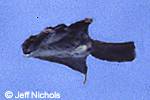
With kitten-soft fur, a taste for fungus and a remarkable built-in paraglider, flying squirrels – the nocturnal cousins of the familiar red squirrel - are gliding through Alaska forests from Ketchikan to Fairbanks in greater numbers than previously suspected.
“Most people don't even know they're here,” said Winston Smith, a wildlife research biologist with the U.S. Forest Service. Smith has studied flying squirrels in Southeast Alaska since the late 1990s. “So far, data from Prince ...
Flying Squirrels ArticleContinued
Fly-By-Night Squirrels Favor Truffles and Lichens
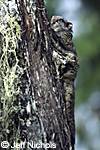
Lichens and fungi are the main components of the flying squirrel's diet. But the biologists who live-trap these nocturnal, gliding rodents don't bait their traps with mushrooms.
"We use a mixture of peanut butter, molasses and rolled oats, formed into a nice peanut butter ‘cookie,'" said biologist Jeff Nichols.
Nichols estimates he's trapped and released 300 to 500 flying squirrels for research projects, mostly on Prince of Wales Island. He said they are about ...
Squirrel Food ArticleContinued
Inside the Wolf Den
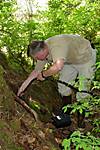
Wriggling into the wolves' underground den, I could make out several squirming wolf puppies curled up on top of one another. Outside, the pack's howling and barking was escalating.
Coming face to face with a half-dozen wolf puppies was the high point of a week-long project to document some of the work being done by Fish & Game biologist Dave Person on Southeast Alaska's Prince of Wales Island. Person has been studying these wolves for 12 years and for the past five he's been looking into ...
Wolf Den ArticleContinued
Robins Ready for Trip South
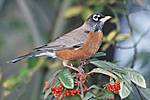
Late summer in Alaska and trees like the mountain ash, with its bright orange-red berries, draw flocks of noisy robins. The birds are packing in food as they ready for their fall migration south.
Just as the arrival of robins in Alaska is a sign of spring, these congregations of robins prior to migration is a sign that autumn is approaching.
Robins are most vocal in the spring and early summer and tend to quiet down in July and August. Their familiar “chup, chup” call, as well ...
Robins ArticleContinued