
Alaska Fish & Wildlife News
November 2026
Caribou and Antlers
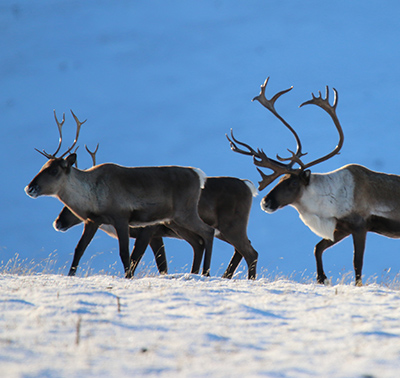
I have lived alongside the Western Arctic Caribou Herd for nearly a decade—yet I didn’t realize that cow caribou shed their antlers after calving. To understand why this surprised me, it might help to know that ultimately, it was the caribou that brought me to Alaska all those years ago.
Alaska had always been a dream for my husband, a biologist and avid adventurer. I, on the other hand, was more skeptical (I prefer my snow relegated to Christmas). When we wanted a change, I agreed to add Alaska to the list—as long as we weren’t looking any farther north than Ketchikan. We now live in Kotzebue.
If you’ve never been, Kotzebue sits 30 miles north of the Arctic Circle and about 1,300 miles north of Ketchikan. It is also home to an Alaska Department of Fish and Game satellite office and one of the state’s only caribou-specific biologist positions. Caribou are as central to Kotzebue as the village is to the region—an iconic Alaskan community built on a gravel spit in the Kotzebue Sound of the Chukchi Sea and serving as a hub for many northwestern villages.
Though it missed the mark for my ideal geographic locale, Kotzebue felt right. When we finally got here, having never been before, we felt at home. One of the first meals shared with us was caribou stew, a staple here. Once we settled in to raise our children, manage caribou, and pursue new goals, the rhythm of life here—caribou life—began to shape our days.
As you can imagine, caribou became a constant in our lives. If I were being dramatic, I might say they dictate our lives. However, most of the time, my view is myopic—aren’t caribou the only real resource in Alaska? (Sorry salmon—move over.) Our year starts when the caribou begin to move.
Each spring, as the caribou begin their arduous trek north, the caribou biologist gears up, takes to the air, and heads into the field where crucial data is collected. Spring in our household brings capture stories, stiff bones (for the caribou biologist, who actively jumps from helicopters), hours of surveys, and this year, a son’s wedding squeezed between the composition survey and the calving survey. When this chaos settles, we wait, and wait, and wait some more—what will the caribou decide to do this year?
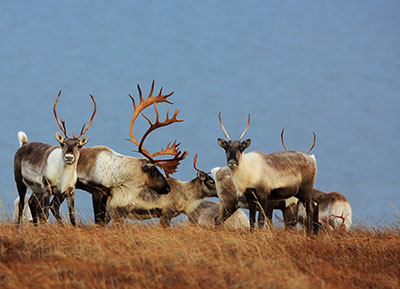
Summer is spent waiting with bated breath to see whether the caribou will aggregate or, if the weather is poor, blithely move on without needing to congregate on leftover snowfields and coastal plains to fend off vicious bugs (insects and what have you).
As summer fades into fall, the field season winds down with another composition survey as the animals gather in preparation for another reproductive cycle.
When fall burns out and winter edges in, the work shifts again and meeting season begins. All the data collected is analyzed and reported, to guide management and regulation—work that protects herd numbers while providing harvest opportunities.
Any teacher will tell you that asking questions is a good trait. Caribou are endlessly interesting animals, and spending time with someone who actively works with them pushes me to understand the “why” of caribou. Because I’m curious, I ask questions. While I get my information secondhand, I thought I knew a lot about caribou.
For example, caribou are elusive. While they return to the same region, they do not always return to the same exact place. Their routes shift without clear explanation—near Kobuk one year, near Noatak the next. The adage “Caribou will do what caribou do” is often quoted at home as we try to keep up with the herd. With all that unpredictability, one migration remains consistent.
Every year the Western Arctic caribou herd (or WAH) migrates from its winter range to calving grounds on the North Slope—more specifically, the Utukok Uplands. This return to the same general area is what defines an independent caribou herd. For the WAH, that calving area spans about 8,000 square miles. What I didn’t realize was that once the long migration ends and calving occurs, cow caribou shed their antlers within days—and, even more interestingly, they often chew on them.
Shedding and chewing
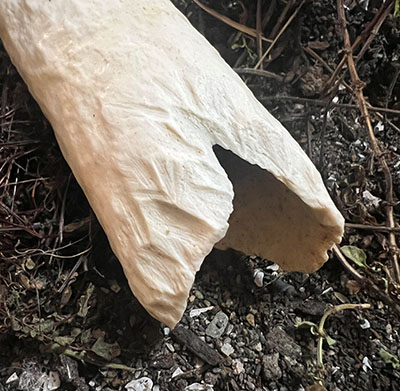
I knew cow caribou had antlers, but I never considered their shedding cycle. I assumed it happened in fall, like the bulls. Instead, cows shed theirs in the days after giving birth—during one of the most physically demanding periods of their lives. Some have just traveled hundreds of miles while carrying a fetus, must now protect and nourish a newborn, and are already beginning to regenerate antlers. Why shed their antlers after giving birth?
As it turns out, scientists have been wondering the same thing.
Cow caribou are the only female cervids with antlers. Many hypotheses attempt to explain this, including protection of themselves and their calves. A recent study, “A Gnawing Question: How Do Caribou and Other Arctic Mammals Exploit Shared Bone Resources?” adds another possibility. Researchers collected shed antlers and skeletal remains from the Porcupine caribou herd’s calving grounds and found that about 86% of antlers showed chewing marks, most of them from caribou themselves. This suggests cows not only consume their freshly shed antlers but may also chew older ones from previous seasons.
But why? Eating bones—antlers included—is called osteophagy. It is common among both carnivores and herbivores. For herbivores, it may supply nutrients not readily available in their diet, or, in the case of caribou, nutrients depleted by migration, birth, lactation, and antler regeneration.
Basically, cow caribou grow and carry a necessary phosphate and calcium replacement with them. While skeletal bones and antlers both contain hard and soft tissues and contain similar calcium concentrations, the calcium in antlers is easier to absorb. The study also highlights the fact that because this is the Arctic, shed antlers weather at a slower rate, providing more opportunities for caribou to reuse this resource on a yearly basis.
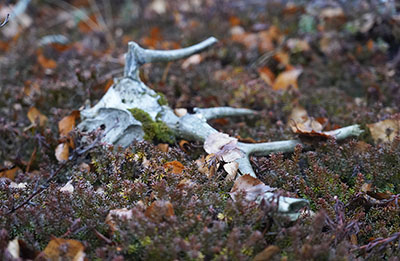
Because caribou appear to be the primary consumers of shed antlers, the study suggests that the close timing between calving and antler shedding may exist to provide a nutrient source for both cow and calf. It even hints that nutrient recovery could play a role in why cows have antlers at all, and why herds reliably return to the same calving region. Isn’t science remarkable?
Understanding the shedding schedule is not just cool science. The Western Arctic caribou herd is currently declining. Cow preservation is key to growing the herd. Understanding how and when cows shed their antlers can help hunters be more aware—looking for other identifying indicators before assuming a cow may be a young bull.
All of this brings me back to my own relationship with the herd. As I reflect on my connection to caribou, I am humbled to be a part of this remarkable resource that is at the heart of Arctic life. I am once again reminded of what caribou mean to the people who rely on them—and to me. Even after a decade, something as small as antler shedding reminds me: you’re never too old to learn.
Subscribe to be notified about new issues
Receive a monthly notice about new issues and articles.